
Introduction
Before a single screen is designed, every mobile project has to answer one technical question: build two native apps, or one cross-platform app that runs on both iOS and Android? The choice affects cost, speed to market and how the app feels in your users' hands.
Native apps (Swift & Kotlin)
Native apps are written separately for each platform with Apple's and Google's own languages and tools. They get new OS features first, deliver the smoothest animations and have full access to hardware such as Bluetooth, cameras and sensors. The trade-off is two codebases and roughly double the build and maintenance cost.
Cross-platform apps (Flutter & React Native)
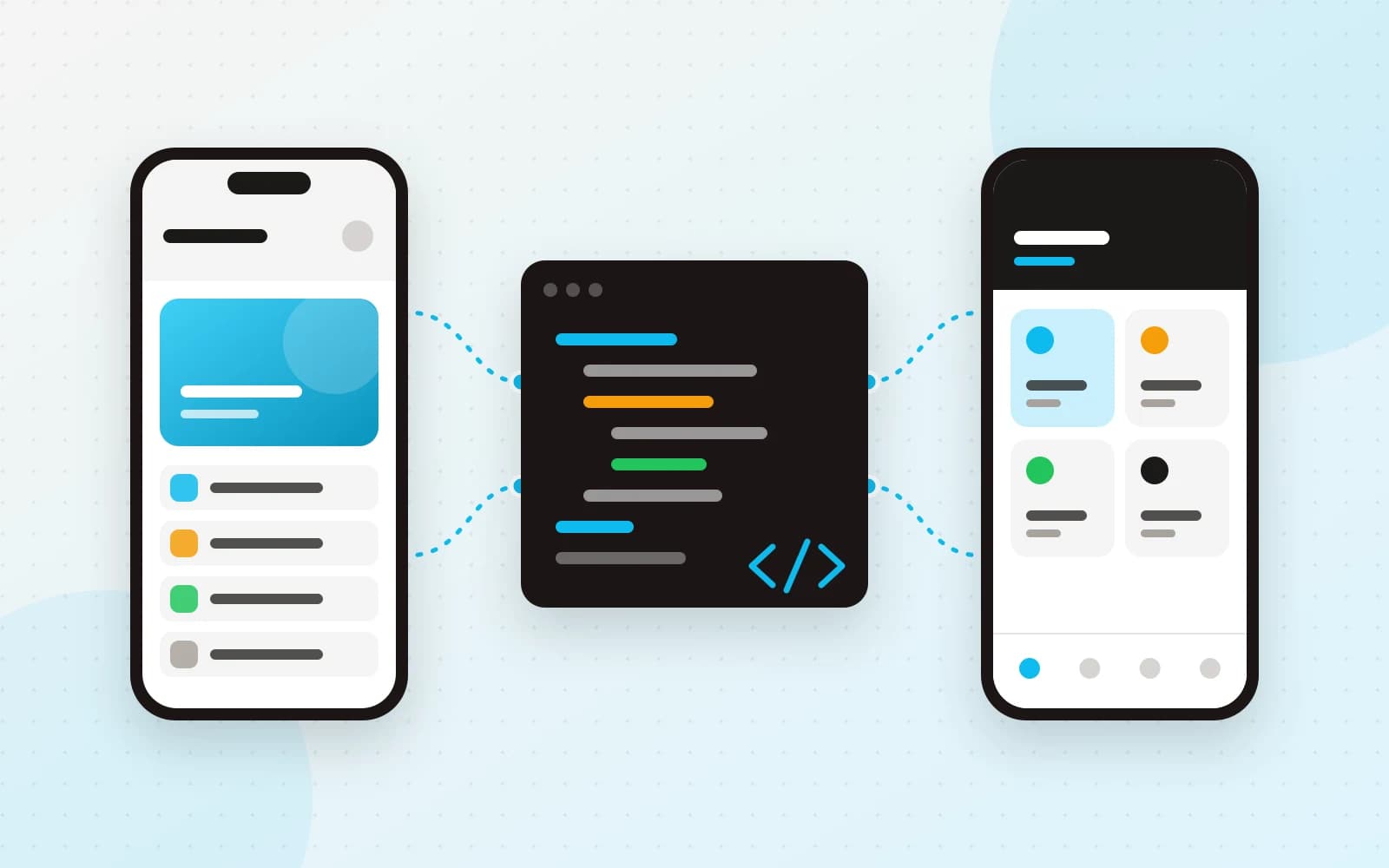
Cross-platform frameworks ship one codebase to both app stores. For most business apps, such as bookings, e-commerce, loyalty and internal tools, the result is fast and polished while development time and cost drop significantly. Native modules can still be added where a feature needs deep device access.
How to choose
- 01Go cross-platform if you need iOS and Android at launch on a limited budget.
- 02Go native if the app depends on heavy graphics, AR, or advanced Bluetooth and background tasks.
- 03Check which stack your team or agency already knows well: Flutter, React Native, Swift or Kotlin.
- 04Think about maintenance: one codebase means one set of bug fixes and updates.
- 05Validate the idea with a cross-platform MVP first; critical parts can be rebuilt natively later.
Conclusion
For most growing businesses, a cross-platform app offers the best balance of quality, speed and cost. If your product pushes the hardware to its limits, native is worth the investment. Either way, we recommend the stack that fits your goals, not the one that is trending.