
Introduction
More than half of mobile visitors leave a page that takes over three seconds to load, and Google uses page experience as a ranking signal. The good news: most slow websites suffer from the same handful of problems, and fixing them rarely requires a full rebuild.
Why speed matters
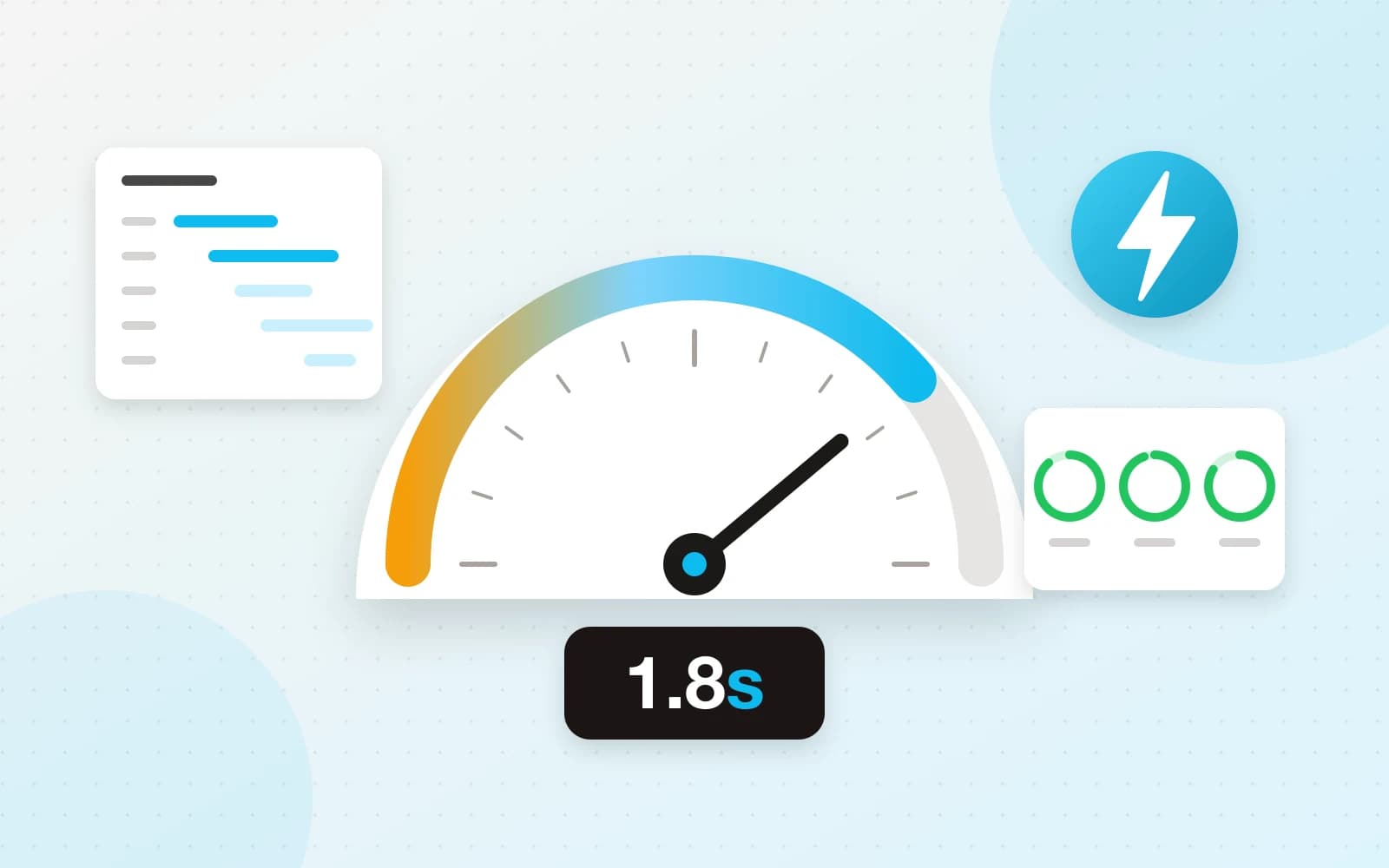
A faster site keeps visitors on the page, ranks higher in search and converts better. Google's Core Web Vitals measure exactly this: how quickly the main content appears (LCP), how fast the page responds to taps (INP) and how stable the layout stays while loading (CLS).
Measure before you fix
Run your key pages through PageSpeed Insights or Lighthouse, and test on a real mid-range phone over a mobile connection, not just a fast office laptop. Note your scores, then fix the issues that affect the most visitors first.
5 ways to load in under 2 seconds
- 01Compress and resize images, serve modern formats like WebP or AVIF, and lazy-load anything below the fold.
- 02Use a CDN so files are delivered from servers close to your visitors.
- 03Remove unused plugins, tracking scripts and heavy libraries, and defer the JavaScript that remains.
- 04Turn on caching and pre-render pages with static generation or server-side rendering where possible.
- 05Load fonts efficiently: use fewer weights, self-host them and set font-display: swap.
Conclusion
Speed is not a one-off task. Re-test after every major change and watch your Core Web Vitals in Google Search Console. If your site still feels slow, our team can audit it and tell you exactly what to fix first.